

A wallet product page is a legal document pretending to be a mood board. Everything the brand is willing to commit to is on it. Everything it is not willing to commit to is missing from it. You can learn more from what a page refuses to say than from what it says.
While preparing The Wallet Material Transparency Audit 2026, we read the product pages, warranty policies and FAQ pages of 24 wallet brands, line by line, with a source URL recorded for every finding. The same five patterns kept appearing. None of them proves a product is bad. Each of them means you are being asked to pay for something you cannot check.
Red flag 01
A material with an adjective but no maker
"Premium leather." "Aerospace-grade aluminum." "Genuine full-grain." An adjective is not a supply chain. If the leather is good, somebody tanned it, and that tannery has a name. If the carbon fiber is real, somebody wove it, and that company has a name. A brand that will not name its supplier is either not allowed to, does not know, or does not want you comparing.

Red flag 02
A warranty badge with no warranty document
"Lifetime warranty" on the product page means nothing until you find the policy page and read what "lifetime", "warranty" and even "you" mean in it. Who pays shipping? Is the remedy a repair, a replacement or store credit? Does coverage start at purchase or delivery? If the badge and the policy disagree, the policy wins, and you find that out at claim time.
Red flag 03
No country of manufacture, anywhere
"Designed in California" is not a place of manufacture. "European craftsmanship" is not a country. When a brand is proud of where its products are made, it says so on the product page. When the information is absent from the product page, the FAQ, the about page and the footer, the absence is the answer.
Red flag 04
The same fact told two different ways
Read two pages of the same website and compare. If the about page says one titanium grade and the blog says another, if the warranty is five years on one product page and one year on a near-identical product, if the return window differs between the store and its legacy domain, then nobody in the company owns the facts. Marketing writes one page, support writes another, and neither checks.
Red flag 05
Beautiful photos, no numbers
"Slim." "Lightweight." "Holds all your essentials." Compared to what? A wallet is a physical object with a thickness in millimeters, a weight in grams and a card capacity you can count. Studio photography with no measurements is not a specification, it is set design. If the numbers were flattering, they would be on the page.
The seven questions that settle it

Before you pay for any wallet, from any brand, including ours, open the product page and try to answer:
- Who made the leather? A company name, not a country or an adjective.
- Who made the composite or the metal? Manufacturer and grade.
- In which country was it manufactured?
- What exactly does the warranty cover, for how long, and where is the full text?
- Do the specs match across every page of the site?
- Are thickness, weight and capacity published as numbers?
- Is there a supplier list or documentation anyone can check?
Seven yes answers are rare. In our audit of 24 brands, only one scored above 80 percent on the equivalent criteria. But every yes you can verify is a claim the brand cannot quietly walk back.
Where we stand
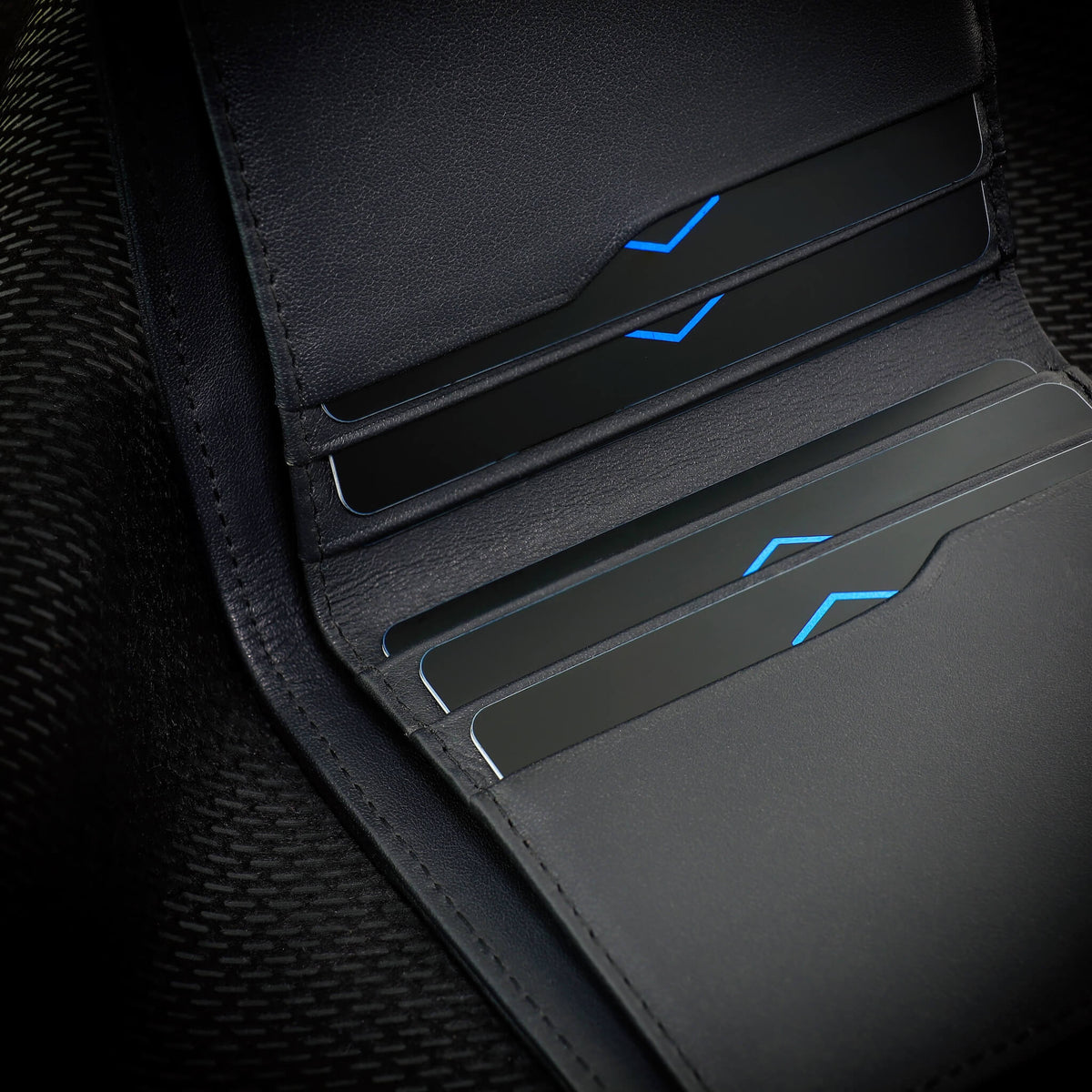
COLDFIRE publishes its full bill of materials with every supplier named: Carbitex, Inc. for the flexible carbon fiber, Packer Leather for the kangaroo leather, AMANN for the thread, Grade 5 Ti-6Al-4V for the titanium hardware, Dyneema for the lining. Manufactured in Plovdiv, Bulgaria, in the European Union. Five-year structural guarantee, full text published. The documentation is in the engineering file, and we excluded ourselves from the audit rankings because a publisher grading itself is its own red flag.
We don't ask you to trust us. We ask you to check.
Read the full audit → Check our engineering file →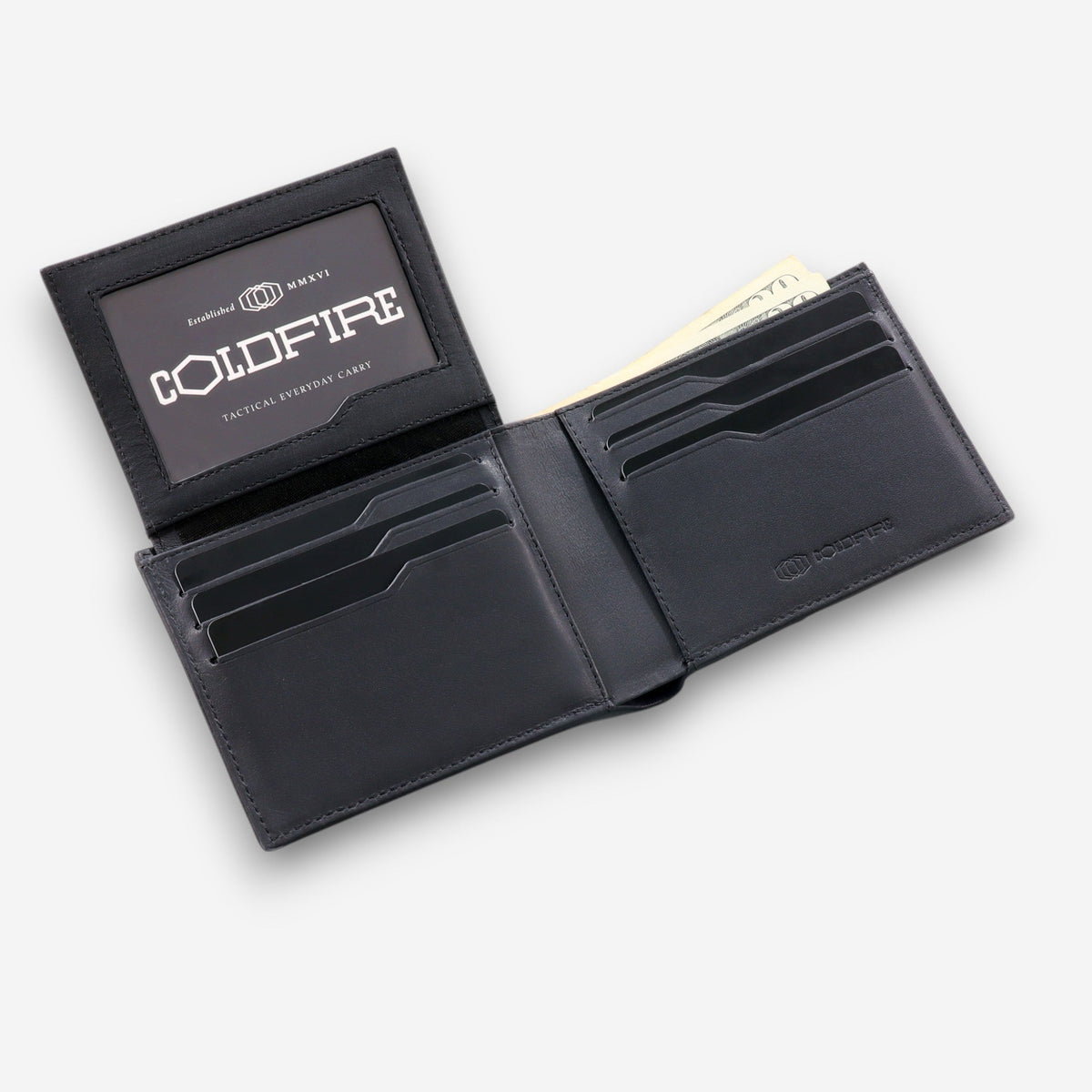

Сподели:
The Word "Premium" Has Lost Its Meaning
Why leather wallets stretch, and how to stop it