
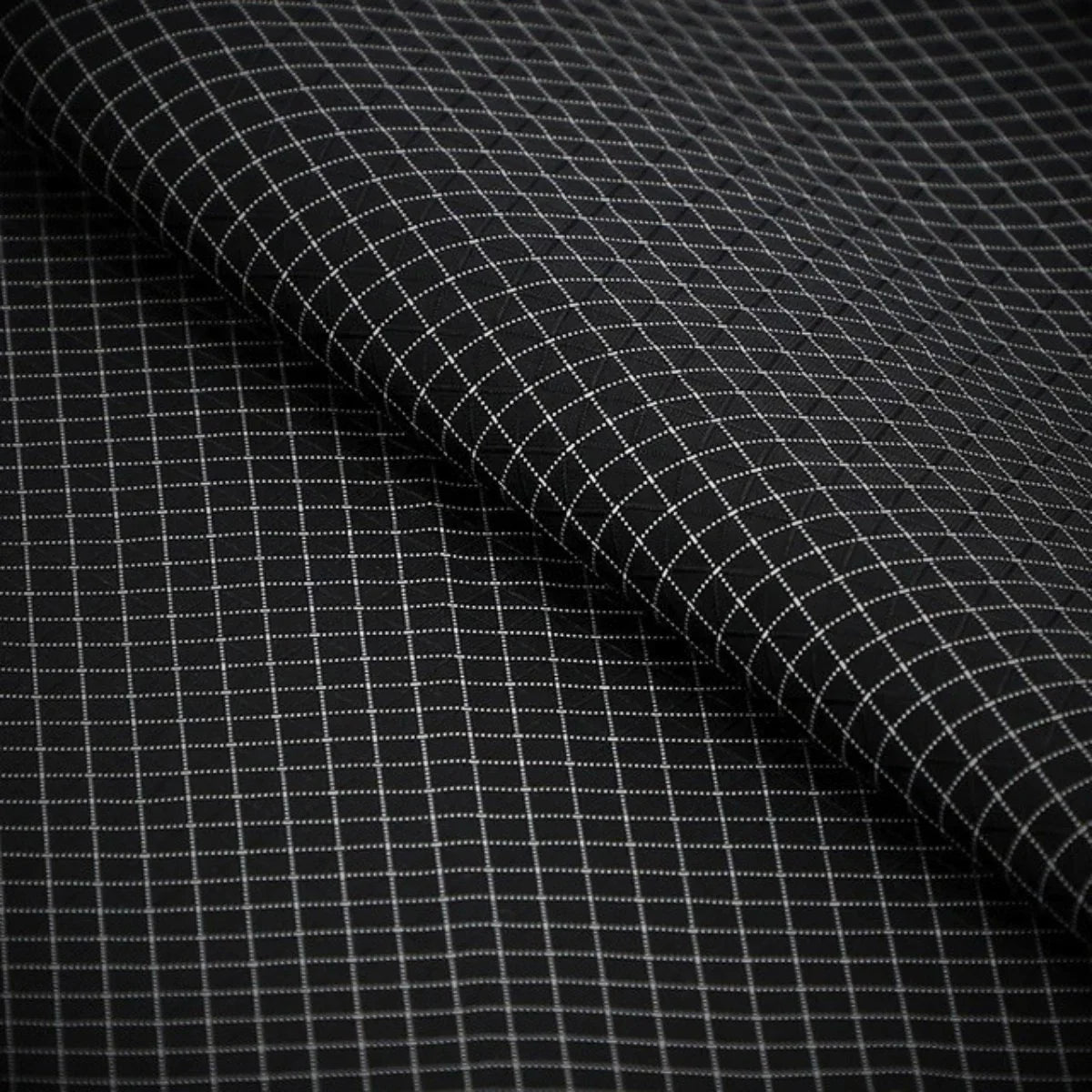
The lining is the part of a wallet that fails first and gets talked about least. Cards slide across it thousands of times a year, sweat reaches it before it reaches the leather, and the pocket mouth takes a small tug every time a card goes in. Four materials cover almost every wallet sold: cotton, nylon or polyester, leather, and Dyneema-reinforced ripstop. This article compares them on the things that decide how long a wallet lasts, says plainly which we chose and why, and where the choice costs something.

What a wallet lining actually does
Three jobs. It gives the card slots a low-friction surface so cards go in and out without dragging the leather. It takes the abrasion that the leather would otherwise take, because a card edge is a small blade. And it holds the shape of the pocket, since a slot that stretches is a slot that drops cards.
A lining fails in one of three ways: it frays at the pocket mouth, it wears through where card corners land, or it stretches and the slot goes loose. Which one happens, and when, depends almost entirely on the fibre and on how the edge was cut.
The four lining materials, compared
| Material | Typical thickness | Abrasion from card edges | Moisture | Stretch | Typical failure | Where you find it |
|---|---|---|---|---|---|---|
| Cotton twill or canvas | 0.3 to 0.5mm | Poor. Cotton fibre is short and breaks under repeated rubbing. | Absorbs sweat and holds it. Stains, then smells. | Moderate, worse when damp. | Wears through at the card corners; pocket mouth frays. | Budget leather wallets, fashion wallets. |
| Nylon or polyester (plain weave) | 0.1 to 0.25mm | Fair to good. Polyester pills; nylon holds up better. | Does not absorb. Dries fast. | Low. | Frays from a blade-cut edge; thin weaves wear through. | Most slim and minimalist wallets. |
| Leather lining (split, pigskin or full-grain) | 0.6 to 1.0mm per layer | Good if full-grain or pigskin; poor if a bonded or sanded split. | Absorbs, then dries. Can stiffen over years. | Low to moderate. | Adds thickness; thin splits delaminate and crack. | Traditional bifolds. Saddleback Leather lines with pigskin and says so on the product page. |
| Dyneema ripstop (nylon base, Dyneema grid) | 0.15 to 0.25mm | Very good. The grid stops a cut or wear spot from spreading. | Does not absorb. Dyneema fibre is hydrophobic. | Very low. Dyneema has almost no elongation under load. | Rare in a wallet. The practical limit is heat, not wear. | Ultralight packs, sailing, and the bill and card pockets of COLDFIRE wallets. |
| No lining (aluminium or carbon plate wallets) | None | Not applicable. The cards rub the plates and each other. | Not applicable. | Not applicable. | Elastic band or spring wears instead. | Plate wallets such as Ridge and Secrid. |
Thickness figures are typical ranges for the material type, not measurements of any one brand's product.
What Dyneema is, without the marketing
Dyneema is a brand of ultra-high-molecular-weight polyethylene fibre, UHMWPE, made by Avient. It is the same polymer family as a milk bottle, drawn into a fibre whose molecules are aligned along its length. That alignment is what gives it its properties: very high tensile strength for its weight, almost no stretch, high resistance to abrasion and cutting, and a density of about 0.97, so it floats. It does not absorb water.
It also has limits that matter in a wallet, and they are worth stating. It softens at around 145 degrees Celsius, far below nylon, so it cannot be hot-pressed or ironed. It takes dye poorly, which is why Dyneema fabrics are nearly always white or carry a coloured nylon base. And it is slippery, which is good for card slots and bad for stitching, so seams through it need a bonded thread and a tight stitch length.
Dyneema ripstop is mostly nylon, and that is the point
The lining fabric in a wallet is not pure Dyneema. It is a nylon ripstop with Dyneema threads woven in as a grid. In the supplier specification for a typical 210 denier gridstop, the Dyneema content is around 9 percent of the fabric weight. The nylon gives the fabric body, colour and something to stitch through. The Dyneema grid does one job: if a cut or a worn spot starts, the next grid line stops it. A plain nylon lining with a 2mm tear becomes a 20mm tear in a month. A gridstop lining with the same tear stays at 2mm.

Why the cut matters as much as the fibre
Every synthetic lining is only as good as its edges. A blade-cut edge on nylon leaves loose fibre ends at the pocket mouth, and each card that passes pulls at them. That is the fraying people photograph in two-year-old wallets. A laser cut melts the edge as it cuts, fusing the fibre ends together. There is nothing loose to pull, so the pocket mouth looks the same in year four as on day one.
COLDFIRE lining pieces are laser-cut on an Atom FlashCut system from the same stored pattern every time, which is also why the pocket geometry does not drift between batches. This is a manufacturing choice, not a material one, and a brand using plain nylon could make it too. Few do, because a laser table costs more than a clicking press.
What we chose, and what it costs
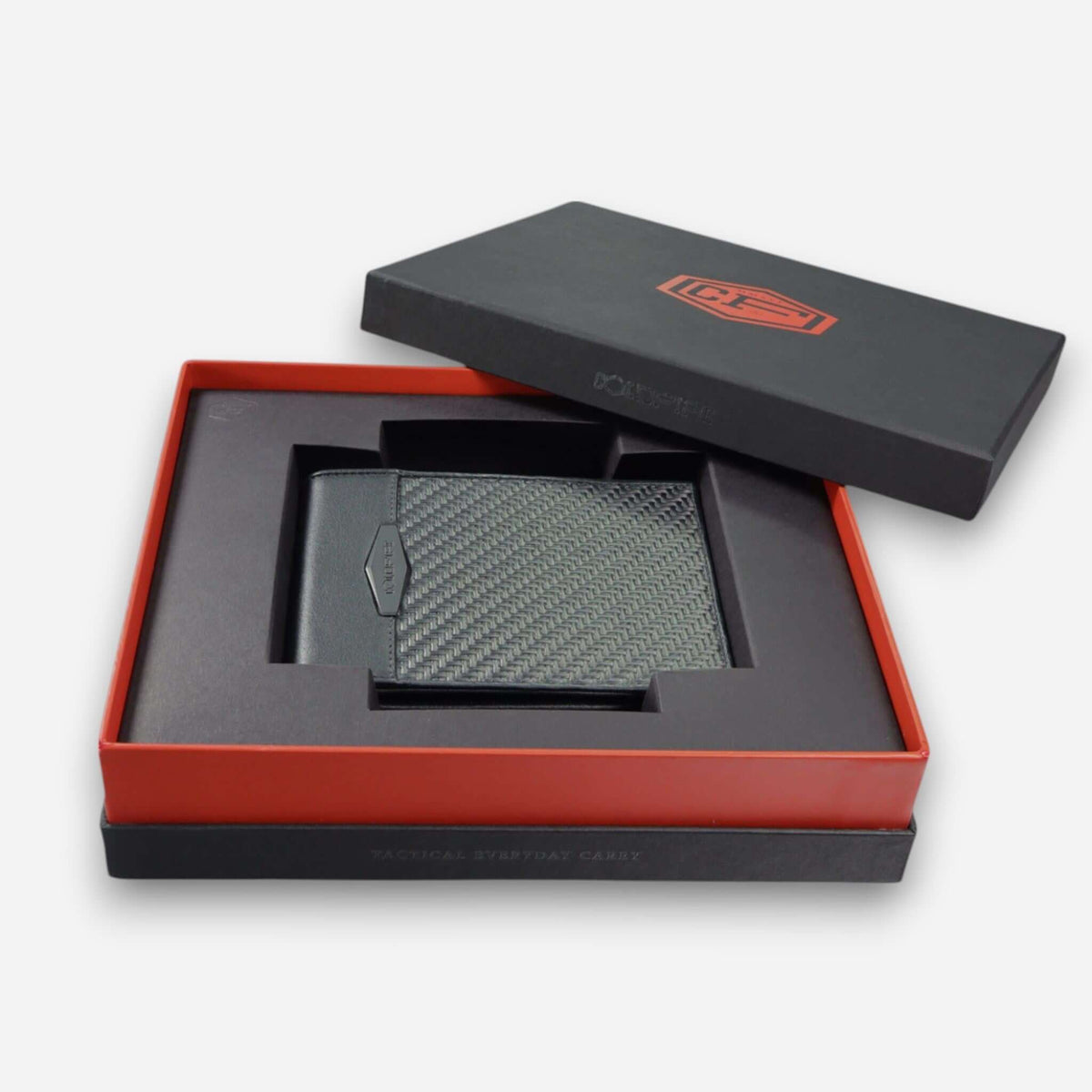
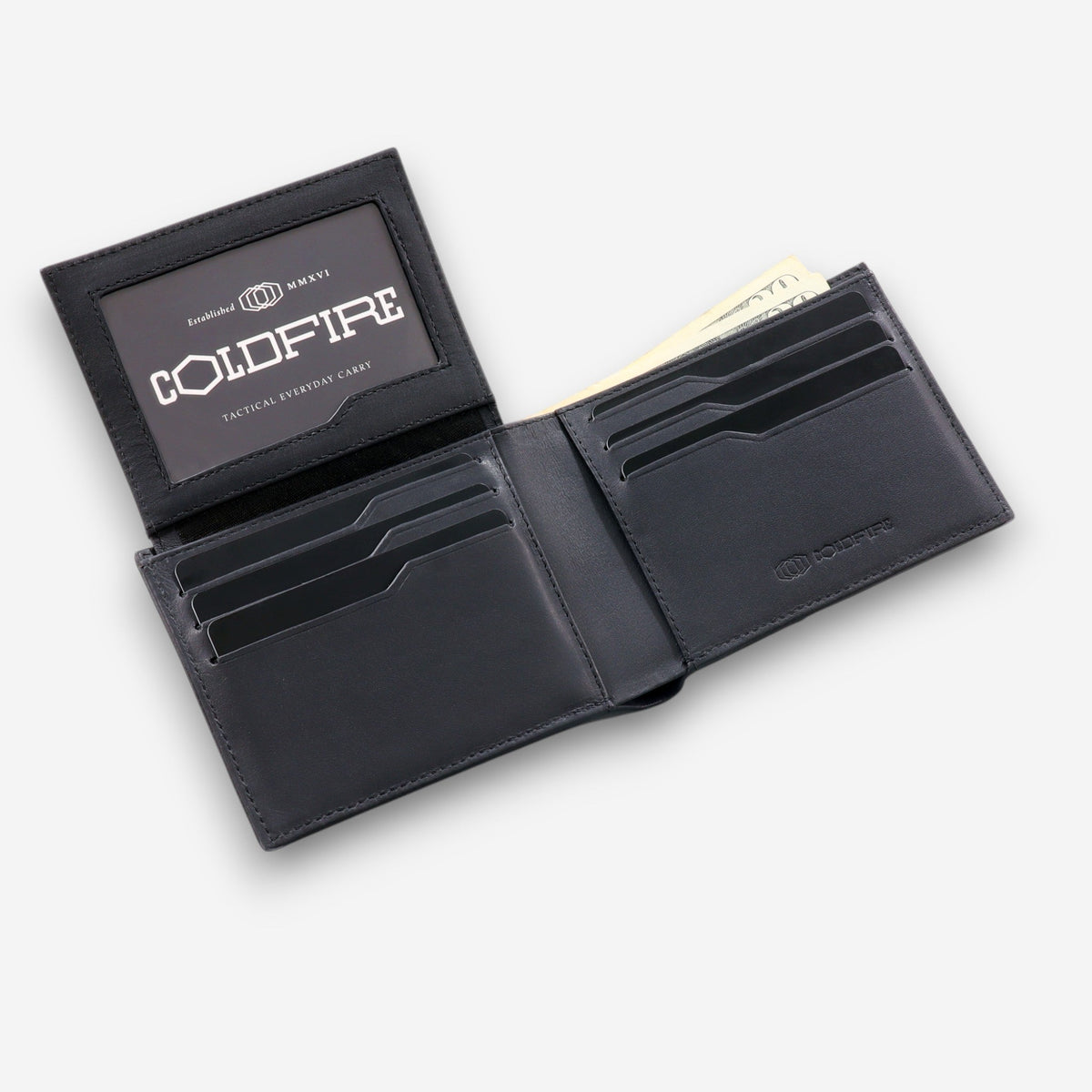
Every COLDFIRE carbon fibre wallet (the Flex, Strike and Scout series) uses a Dyneema ripstop lining in the card and bill pockets, laser-cut, stitched with AMANN Strongbond bonded thread. The shell is Carbitex flexible carbon fibre and K-Leather kangaroo leather, so the lining had to match the rest of the material list rather than undercut it.
The cost is real and we should say it. Gridstop with Dyneema costs several times what plain nylon lining costs per metre, and laser cutting is slower than die cutting. Those two decisions are a measurable part of why a Flex One is 199 euro and not 99. If you keep a wallet for two years and replace it, the difference will not pay back. If you keep one for ten, it will.
- Lining fabric
- Dyneema ripstop: nylon ripstop base with a Dyneema UHMWPE reinforcing grid
- Cut
- Laser-cut, edges fused, Atom FlashCut CNC
- Thread
- AMANN Strongbond bonded polyamide, OEKO-TEX Standard 100
- Used in
- Flex Air, Flex One, Flex Ultra, Strike Core, Strike Pro, Scout One
- RFID
- Separate RFID Data Armor shielding layer; the lining itself does not block RFID
- Made in
- Plovdiv, Bulgaria, European Union
- Warranty
- Five years

How to check a lining before you buy
- Ask what it is. "Premium fabric lining" is not a material. Nylon, polyester, cotton, pigskin and Dyneema are. A brand that names the fibre has usually chosen it on purpose.
- Look at the pocket mouth. On a product photo at full zoom, a laser-cut synthetic edge is clean and slightly glossy. A blade-cut edge shows individual threads.
- Look for the grid. Gridstop has a visible square pattern of heavier threads. Plain ripstop has a finer, more uniform grid. Plain weave has none.
- Weigh thickness against lifespan. A leather-lined bifold can be excellent. It will also be 8 to 12mm thick empty. Decide which you are buying for.
Every material in a COLDFIRE wallet is named with its maker on the Engineering and Quality page, lining included.
Lining questions, answered
What is the most durable wallet lining?
For abrasion from card edges and resistance to tearing at the pocket mouth, a Dyneema-reinforced ripstop is the most durable fabric lining in common use. A thick leather lining is also durable but adds roughly 1mm per layer, which is why most slim wallets avoid it.
Is Dyneema the same as Dyneema Composite Fabric?
No. Dyneema is the fibre, an ultra-high-molecular-weight polyethylene made by Avient. Dyneema Composite Fabric is a laminated non-woven sheet of that fibre used in ultralight tents and packs. Dyneema ripstop or gridstop is a woven nylon fabric with Dyneema threads woven in as a reinforcing grid, which is what wallet linings use.
Why do wallet linings fray?
Cut synthetic fabric has loose fibre ends at every edge. Each time a card slides past, it pulls at those ends. A laser cut melts the edge as it cuts, fusing the fibres, so there is nothing loose to pull. A blade cut leaves the ends open and the lining frays from the pocket mouth inward.
Does a leather lining make a wallet better?
It makes the wallet thicker and heavier and, if the lining is a thin split, not stronger. Full-grain or pigskin linings in a traditional bifold are a reasonable choice when thickness does not matter. In a slim wallet the lining has to be thinner than 0.3mm to make sense, and no leather is both that thin and strong.
Does Dyneema block RFID?
No. It is a polymer fibre with no shielding properties. RFID protection in a wallet comes from a separate metallised layer. COLDFIRE wallets use RFID Data Armor, a copper-nickel shielding layer, independent of the lining.
Can a wallet lining be repaired?
A fabric lining that has frayed or torn is rarely worth repairing because it is stitched into the seams. The practical answer is to choose a lining that does not fail in the first place, which comes down to the fibre and the cut.
Written by Todor Georgiev, founder of COLDFIRE and a leather goods manufacturer in Plovdiv since 2000. Published 26 October 2026. Material figures are from supplier specifications and published fibre data; thickness ranges are typical for each material type.

Share:
Best RFID-Blocking Bifold Wallets for Business Travel (2026)
Gifts for Engineers and EDC People: 12 Things They Will Actually Keep (2026)